RAM Crisis Deepens: New Data Reveals Unprecedented Shortage Severity
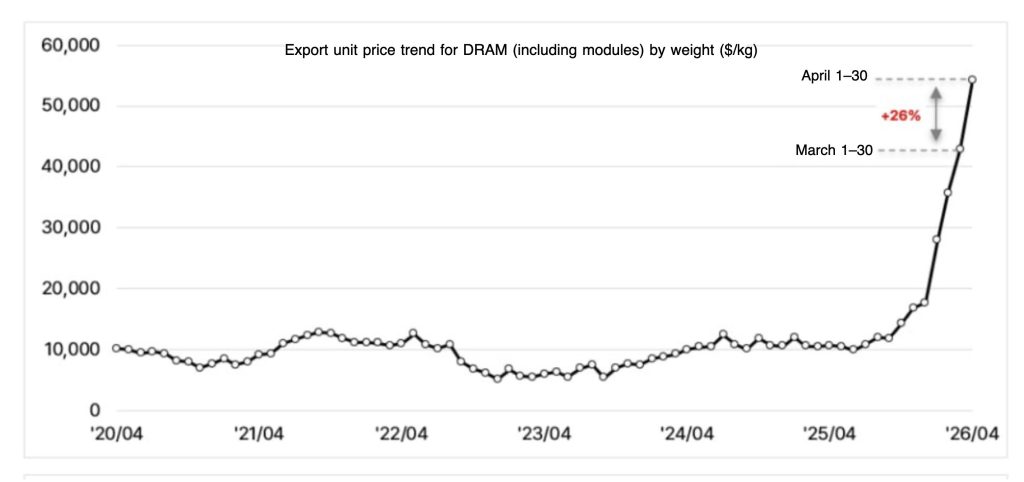
The global RAM shortage has escalated to what industry experts are calling a 'mageddon' scenario, with a newly released chart showing the severity of supply constraints reaching historic lows. According to data from market research firm TrendForce, the ratio of DRAM bit supply to demand has dropped below 100% for the first time in over a decade.

'This chart paints a stark picture,' said Dr. Emily Chen, a semiconductor supply chain analyst at TechInsights. 'We've seen price increases month over month, but this metric shows that the shortage is fundamentally structural – not just a temporary blip.' The data indicates that for every 100 bits of DRAM demanded, only 95 are currently being produced, a deficit that is driving costs higher across the industry.
The immediate impact is being felt by consumers, with DDR4 and DDR5 memory modules seeing price spikes of 40% year-over-year. For PC builders and gamers, the cost of a 32GB kit has nearly doubled since early 2023. Data center operators are also struggling, as server RAM prices have increased by 35% in the last quarter.
Background
The current crisis stems from a confluence of factors dating back to the pandemic. COVID-19 triggered a surge in demand for remote work and learning equipment, while simultaneously disrupting production at major DRAM fabs in Taiwan and South Korea.
Further complications include the ongoing trade restrictions between the U.S. and China, which have limited access to advanced manufacturing equipment. 'The supply chain is still recovering from the pandemic shocks, and now geopolitical tensions are adding another layer of uncertainty,' noted Michael Torres, supply chain director at GlobalTech Consulting.
Additionally, the shift to DDR5 memory has created a production imbalance. Manufacturers have been slow to convert older DDR4 lines to the new standard, leading to shortages of both types. 'We are in a transition period, and the industry underestimated the ramp-up time,' Torres added.
What This Means
For consumers, the immediate consequence is higher prices for new PCs and upgrades. Analysts predict that the shortage will persist through at least the end of 2024, meaning budget-conscious buyers should consider waiting or opting for lower-capacity modules.
Enterprises relying on cloud infrastructure may face increased costs as providers pass on higher DRAM prices. 'This will hit margins for companies that use large amounts of memory, like those running AI workloads,' Chen warned. As noted in the background, the supply chain issues are unlikely to resolve quickly.
Long term, the shortage is accelerating investment in new fabrication plants. Samsung, SK Hynix, and Micron have all announced multi-billion dollar expansions. However, these will take years to come online. 'Until then, we should expect continued volatility,' Torres concluded.
- Consumer Tip: Monitor prices and consider buying during flash sales, as inventory often appears unpredictably.
- Enterprise Tip: Lock in contracts early to avoid spot market premiums.
-- Reporting by [Your Name/Organization]